

Most people picture Egypt in snapshots. The Pyramids. Crowded temples. Long lines under the sun. But there is another side to the country that rarely makes it into travel guides, and you only find it when you slow down enough to look around. That is where the Dahabiya comes in. It does not rush. It does not try to impress you with size or speed. It simply glides through the heart of the Nile, giving you a front-row seat to a quieter, more intimate Egypt that many travelers never even realize exists.
And honestly, that is where the magic happens.

The Nile as a Living Story
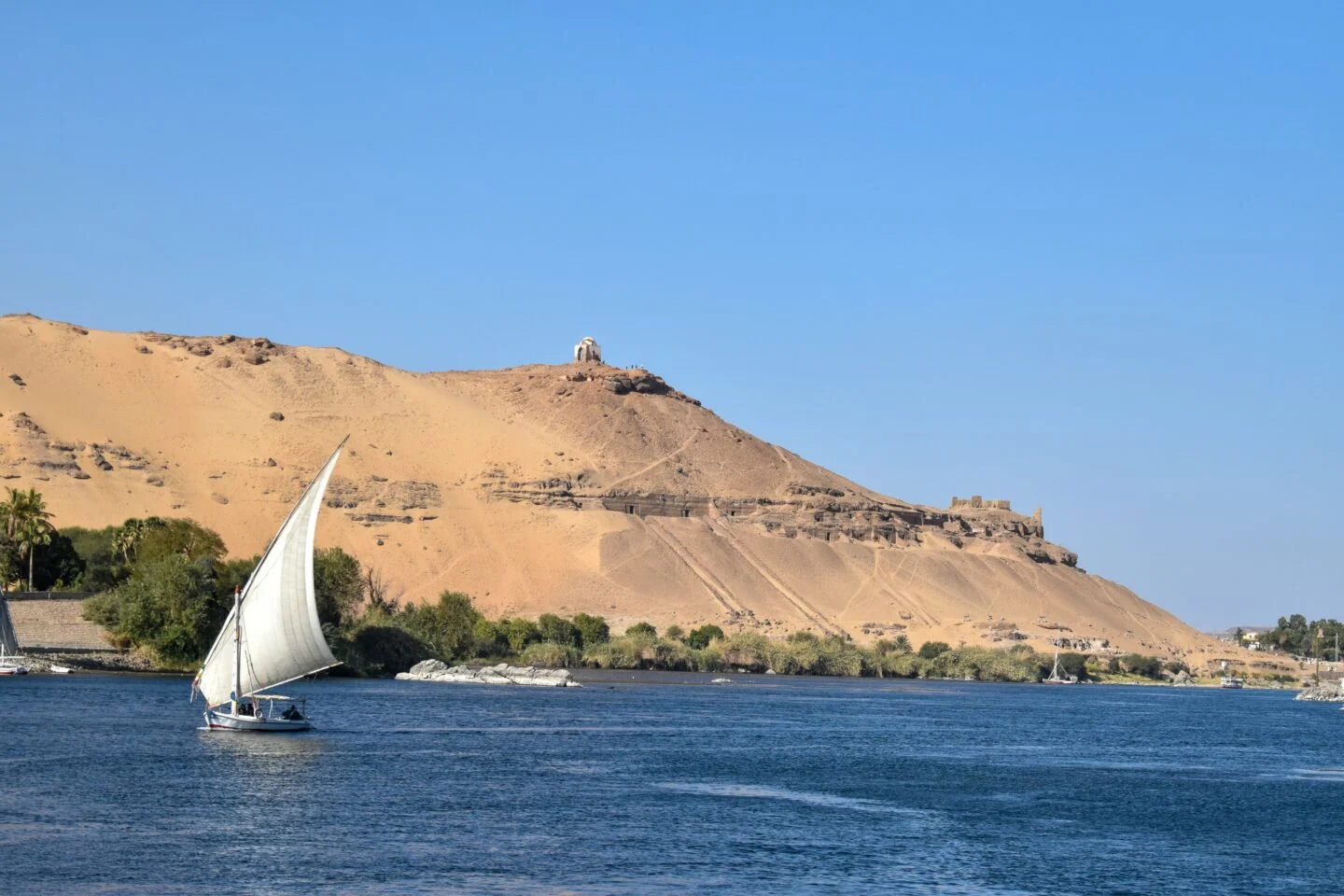
The Nile is not just a river. It is the thread that has held Egypt together for thousands of years. When you are sailing on a smaller boat, you start to sense that history in a more personal way. The water moves at its own pace, and the world along the banks reveals itself slowly, almost shyly.
A Dahabiya does not roar like a large cruise ship. There is no engine thundering in the background. Instead, you hear the soft lap of water against wood, or the wind lightly catching the sails. Because everything is quieter, you notice more. A fisherman mending his nets. A cluster of palm trees leaning toward the water. A heron lifting off just as you pass by.
It feels like the river is telling you a story, one chapter at a time.
Small Villages and Untouched Shores
One of the biggest surprises for many travelers is how many small, authentic communities still line the Nile. These villages do not appear on regular cruise itineraries. They are not designed for tourists. People here live simply, and the rhythm of life has not changed much in generations.
This is where the Dahabiya shines. Because it is small and low impact, it can reach spots that larger ships cannot. You step off onto the sand and suddenly find yourself in a place where children wave as they run down dusty paths, farmers tend to crop right at the water’s edge, and the air feels strangely calm.
These quieter stops are often the most memorable moments of a luxury Dahabiya Nile cruise, because they reveal the Egypt that exists beyond postcards and guidebooks. You are not just observing life. You are walking through it. And that simple shift makes all the difference.
Hidden Temples and Ancient Sites Without the Rush
If you have ever visited a world-famous monument at peak season, you know how it feels. You want to be amazed, but the crowds make it hard to connect with the history in front of you. A Dahabiya helps you escape that rush.
Along the Nile, there are ancient temples and archaeological sites that most big ships do not bother with. Places like El Kab, with its ancient tombs cut directly into the cliffs. Or Gebel el Silsila, where towering sandstone quarries whisper stories of the workers who carved blocks for Egypt’s greatest temples. These sites are not packed with tourists. Sometimes you explore them with only a handful of people around.
That kind of quiet changes everything. You are not fighting for space or waiting for others to clear out so you can take a photo. You are walking through history the way it was meant to be experienced: with room to breathe, time to reflect, and space to imagine what life must have been like thousands of years ago.
And isn’t that what travel is supposed to feel like?
Life on the Water: Slowing Down Enough to See What’s Real
Life onboard a Dahabiya is simple, but rich in a way that is hard to describe. You start to notice small details that stick with you long after you have returned home. The warm light of sunrise stretching across the water. The smell of fresh bread from the galley. Evenings gathered on deck, watching the sky slip from gold to deep blue.
There is nothing rushed here, even if you found last minute cruise deals to Egypt! You do not feel pressured to check off must-see lists or race from one attraction to the next. Instead, you settle into the rhythm of the river. You read. You talk. You look out over the water and let your thoughts slow down. It is almost surprising how quickly your mind adapts. By day two or three, it feels natural to move more gently, to pay attention to things that would normally blur past you.
Sometimes the simplest moments turn into the ones you remember most. Maybe it is the sound of oars in the distance, or the way the stars appear so clearly at night that you almost forget what city lights look like. Maybe it is the joy of having a whole stretch of the Nile to yourself. Whatever it is, it stays with you.
Why Hidden Egypt Matters
So why does this quieter side of Egypt matter? Because travel is not only about seeing famous places. It is also about feeling something. And that emotional connection does not always come from standing in front of a massive structure. Sometimes it comes from sharing tea with someone who is lived by the river their entire life. Or from stepping into a small temple and hearing only your own footsteps echo off ancient walls.
Many people visit Egypt and leave with impressive photos. But the travelers who experience this slower, more personal version of the country walk away with something deeper. They remember the softness of the breeze at dusk. The honesty of rural life. The unhurried conversations. The feeling of being welcomed into a world that does not put on a show for tourists.
That kind of experience stays with you. It shapes how you see a place, and sometimes how you see yourself.
Conclusion: The Egypt Most People Miss
There is a hidden Egypt along the Nile, and it’s easy to overlook if you only follow the well-worn tourist routes. It is quieter. Softer. More human. And it reveals itself only when you give it time and space.
A Dahabiya does not force anything. It simply creates the conditions for connection, the kind of connection you do not always expect but instantly recognize as meaningful when it happens. You come for the scenery, but you end up remembering the moments in between. The gentle mornings. The conversations. The glimpses of everyday life that feel more real than any monument ever could.
If you have ever wondered what Egypt looks like beyond the highlights, or if there’s still a place along the Nile where the past and present blend naturally, the answer is yes. It is there, waiting quietly along the riverbank, ready to show itself to anyone willing to slow down and see it.