

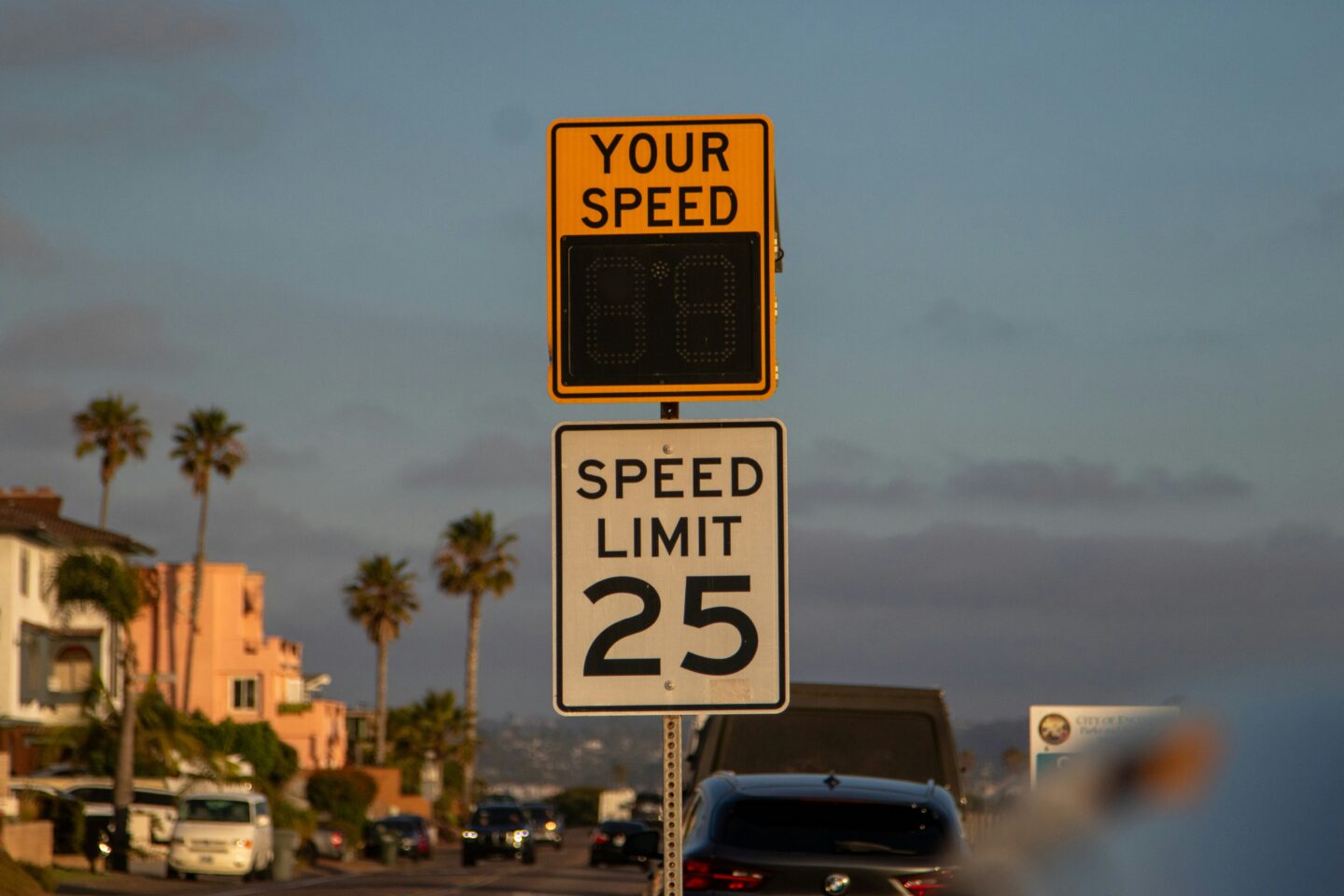
Speeding is still a dangerous problem, as far as road accidents are concerned in the US. According to the National Highway Traffic Safety Administration (NHTSA), 11,288 people died in speeding-related road accidents in 2024. These incidents represent 29% of these fatalities.
The effects of speeding reach way beyond one being fined or being penalized with points.
“Can you lose your license for speeding?” This question gets asked around by drivers who received points for this particular breach of traffic law.
If a person exceeds the speed limit, the ability of the states to punish such conduct through suspension or revocation of a person’s driver’s license depends on the violation’s severity and presence of recklessness or an accident.
Committing a speeding offense for the second and consecutive time could be worse in terms of penalty compared to the first offense.
It is important to realize that speeding violations may lead to penalties related to driving, as a strict or repeated offense might result in the confiscation of one’s driving license.
How a Single Ticket Can Trigger Suspension
Most states run two separate tracks toward losing a license. The first track is a points system that adds up over time. There are specific violations that can trigger suspension on their own regardless of the points collected.
The exact thresholds vary by state. For example, North Carolina suspends a license for at least a month after a single conviction for going more than 15 mph over the limit while traveling faster than 55 mph. Pair that same conviction with a reckless driving charge from the same incident, and the suspension stretches to 60 days.
Two other paths lead to the same result. A single conviction for driving over 80 mph triggers an automatic suspension on its own. So does a second conviction within a year for driving faster than 55 mph but not over 80 mph.
In case an individual receives a speeding violation ticket, they need a competent defense attorney to mitigate the harmful effects of this charge. Miami DUI defense lawyer Brian Kirlew is one such lawyer and has defended numerous clients throughout the state of Florida against charges including DUI. He believes in a holistic defense strategy that involves engaging expert investigators and mitigation specialists to build the strongest possible case, particularly for clients facing serious charges or lengthy prison sentences.
How Points Add Up to the Same Result
Speeding isn’t the only offense that can set off one of those fixed suspensions beyond the points system.
The points system functions differently. Speeding usually adds two to four points depending on how far over the limit the driver was pushing, and most states place the suspension line somewhere between eight and twelve points.
Those points can remain linked to a driver’s record for two to five years before they disappear. Their appearance in one’s record is long enough for multiple tickets to start stacking up if a driver isn’t paying attention.
What Counts as a Speeding Violation
A speeding violation covers going over the posted limit, but it also means driving too fast for conditions even when you’re at or under that limit. Even if a speed is technically within the law, rain, fog, construction, and heavy traffic can lead an officer to treat it as an offense if they believe it wasn’t safe for the conditions at that moment.
Minor violations usually mean a small margin above the limit on a regular stretch of roadway. Serious infractions usually occur in construction or school areas or involve going far above the posted speed limit, and they carry more significant consequences.
What a Speeding Ticket Actually Costs
In most cases, a minor violation results in a penalty and mandatory driving school attendance in some legal jurisdictions. Depending on the degree of speeding violation, the penalties quickly become more severe. Serious violations result in higher fines, potential trial, and driving license revocation, aside from the accumulation of traffic points. Repeat offenders see fines climb and restrictions tighten with each subsequent ticket.
Speeding in construction zones or during designated school hours comes with an increased penalty beyond the regular fine, as these zones are regarded as greater than normal driving conditions.
Know Your State’s Specific Rules
Point totals, suspension cutoffs, and legal violations can have different treatments, depending on which state you are in. Determining the legal vehicle speed in a particular jurisdiction requires looking up the applicable rules that were in effect when your ticket was issued.
Some states post their point schedule and suspension thresholds straight through the DMV. Other places hide the key statute inside the vehicle code. Keep in mind that a small number of points from a violation in one state can result in an automatic suspension elsewhere.
Getting your license taken for speeding comes from either a particularly serious incident or the gradual addition of minor violations. You may avoid either one of them by knowing the precise limits of your state and not exceeding them.