

Morocco can be a vivid, rewarding destination for independent women: medinas full of craft stalls, mountain villages, desert landscapes, Atlantic beaches, and food that makes even a short trip feel memorable. A smart trip starts with realistic expectations: plan your route, dress with cultural awareness, use trusted transport, protect your phone and documents, and keep a working data connection from arrival to departure. This Morocco travel guide brings together practical advice for solo female travel Morocco planning, with a focus on Morocco travel safety, itinerary flow, and staying connected on the road. If you’re planning more adventures, browse more solo travel guides.
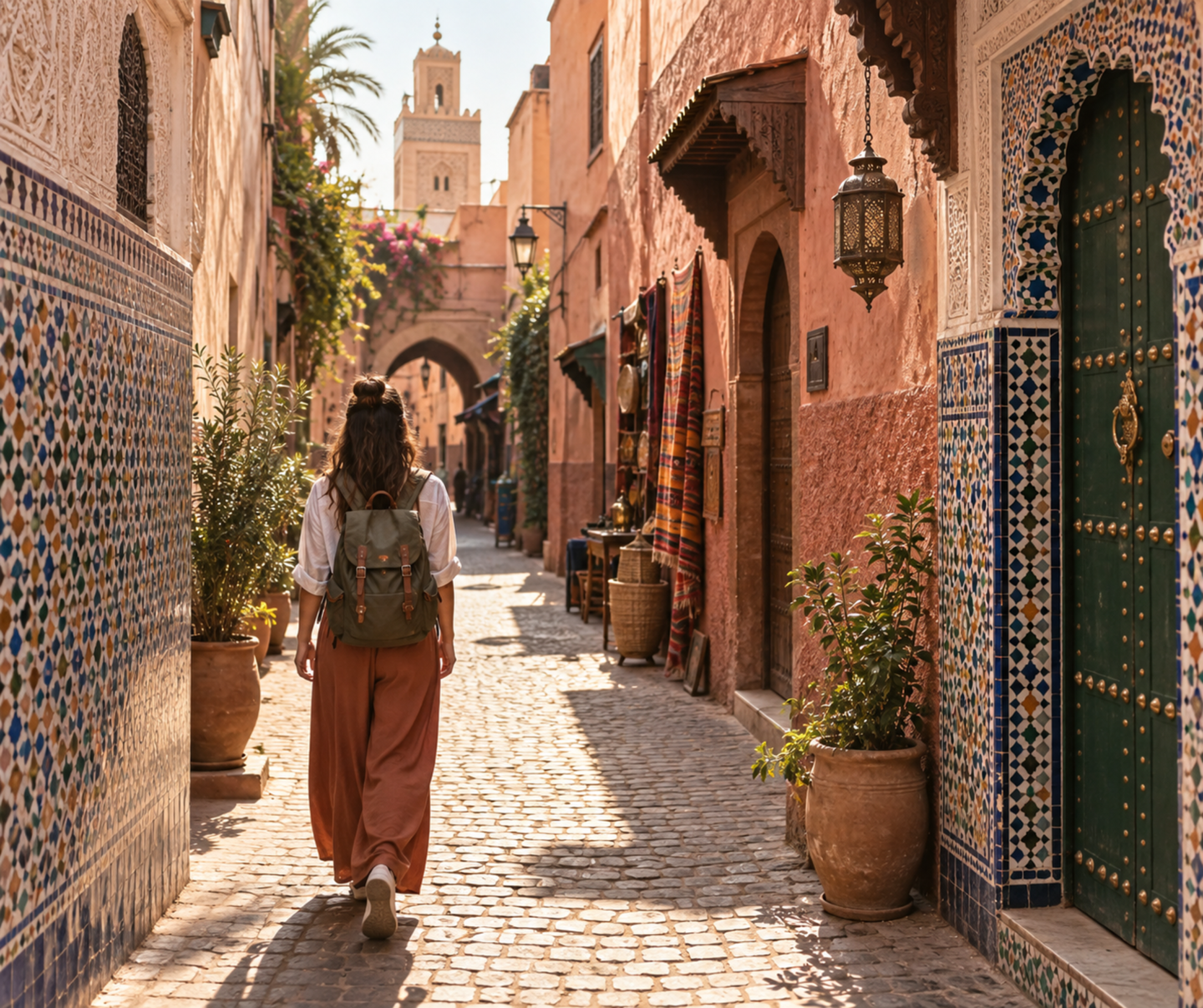
Exploring Morocco’s medinas solo takes a mix of curiosity and street smarts.
Is Morocco safe for solo female travelers?
Morocco is a popular destination for women traveling alone, but it is not a place to approach casually or without preparation. The U.S. Department of State currently advises travelers to exercise increased caution in Morocco due to terrorism risk, while also noting petty crime concerns in major cities and tourist areas; the UK government also warns that women may receive unwanted attention, especially when traveling alone. That does not mean you should avoid Morocco automatically, but it does mean you should plan with more intention than you might for an easier first-time solo destination. (travel.state.gov)
The most common challenges for solo women are usually not dramatic emergencies. They are more often persistent street attention, unwanted guiding, sales pressure, confusing medina lanes, taxi negotiation, pickpocketing, and the fatigue that comes from always being alert. The goal is not to travel scared; it is to reduce friction so you can enjoy the country with confidence.
A safe Morocco trip is built around good judgment in ordinary moments. Arrive in new cities before dark when possible, keep your accommodation address offline, decline help firmly, and avoid isolated areas at night. If a situation feels off, step into a shop, hotel, café, or other public place and reset.
For more Morocco-specific advice, read these tips for solo female travelers in Morocco.
Morocco travel safety starts before you arrive
Good safety habits begin before your flight lands. Morocco rewards travelers who know where they are sleeping, how they are getting there, and what they will do if a plan changes. A little preparation also makes you less dependent on strangers in stressful moments, which is especially useful when traveling alone.
Check your government’s travel advice shortly before departure, not only when you book. Conditions can change, and official pages may include updates on demonstrations, regional risks, entry requirements, local laws, and health issues. U.S. travelers can enroll in STEP for destination alerts, and travelers from other countries can look for similar registration services through their foreign ministry. (travel.state.gov)
Save digital and offline copies of your passport, travel insurance, hotel confirmations, transit tickets, and emergency contacts. Share your rough route with someone at home, including city dates and accommodation names. You do not need to broadcast every move, but at least one trusted person should know when you are changing cities.
Pre-trip safety checklist
- Book your first night in advance. Choose accommodation with clear reviews mentioning location, staff helpfulness, and ease of arrival.
- Plan airport transfer before landing. Know whether you will use an official taxi, hotel transfer, train, or rideshare-style app where available.
- Download offline maps. Mark your riad, nearby main square, train station, and a few cafés or landmarks.
- Set up phone security. Use a passcode, cloud backup, device tracking, and two-factor authentication.
- Carry backup payment. Keep one card and a little emergency cash separate from your day wallet.
- Check local laws and customs. Morocco is a Muslim-majority country with laws and norms that may differ from your home country, including rules around public behavior, photography, alcohol, drugs, and sensitive sites. (gov.uk)
Choosing destinations that suit solo travel
Not every Moroccan stop feels the same as a woman traveling alone. Some places are easier because transport is straightforward, tourist infrastructure is strong, or the pace is calmer. Others are fascinating but more tiring because the streets are busier, the medinas are more complex, or the attention is more persistent.
Marrakech is exciting, photogenic, and full of things to do, but it can be intense. The medina around Jemaa el-Fnaa and the souks is lively, crowded, and full of people offering directions, tours, goods, and services. It is worth visiting, but many solo women prefer staying in a well-reviewed riad near a recognizable landmark rather than deep in a maze-like alley.
Fes is historically rich and atmospheric, with one of the most memorable medinas in the country. It can also be challenging to navigate, so a licensed local guide for the first half-day can be a smart investment. The UK government notes that bogus tourist guides can harass tourists and recommends ensuring guides have an official badge and local permission in medina areas. (gov.uk)
Chefchaouen often feels slower and more manageable. Its blue-painted lanes, mountain setting, and compact center make it a favorite for travelers who want a gentler break between bigger cities. Essaouira is another good solo-friendly option, with coastal air, walkable streets, and a more relaxed feel than Marrakech.
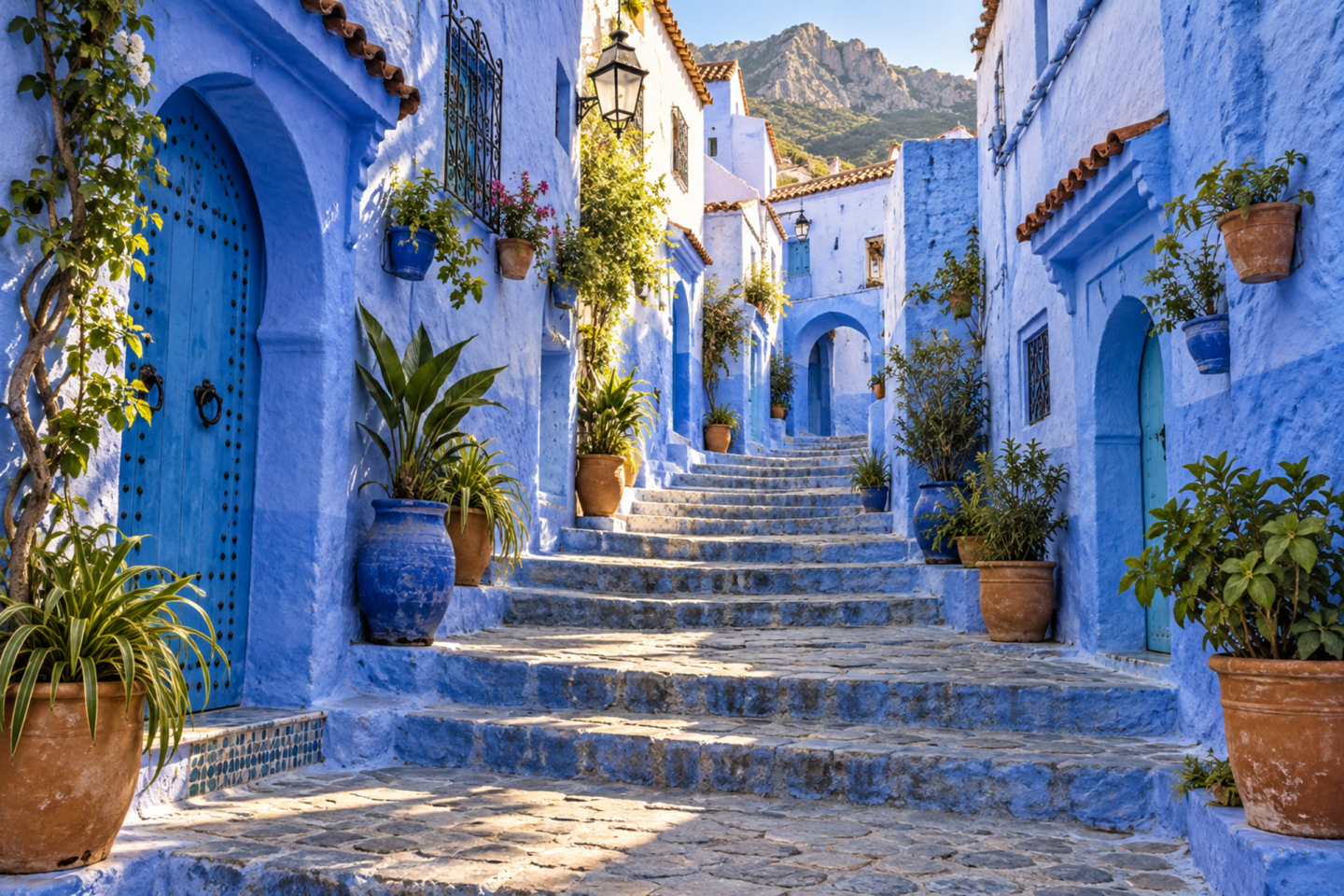
Chefchaouen’s calm blue streets make it a favorite stop for solo travelers seeking a slower pace.
Rabat, Morocco’s capital, is underrated for solo travelers. It has a calmer pace, useful train links, coastal views, and a blend of historic and modern neighborhoods. Casablanca is more businesslike and spread out; it is useful for flights and the Hassan II Mosque, but it is not usually the most atmospheric base for a first Morocco itinerary.
How should you handle unwanted attention?
Handle unwanted attention with calm, brief, unmistakable boundaries. You do not need to smile, explain, debate, or prove that you are being polite; a firm “No, thank you,” “La, shukran,” or “I’m meeting someone” while continuing to walk is often more effective than extended engagement. If someone follows you, move toward a staffed business, hotel, family group, or police presence rather than trying to solve it in an empty lane.
Unwanted attention can range from comments and staring to persistent offers of help. It is common for travelers to be approached by people who want to guide them, bring them to a shop, or tell them a route is closed. Sometimes the interaction is harmless; sometimes it is a setup for a tip, commission, or pressure sale.
A useful rule is to avoid accepting unsolicited guidance inside medinas unless you have chosen the person yourself. If you are lost, ask a shopkeeper, restaurant staff member, hotel desk, or a woman with children rather than someone who approaches you first. Keep your phone low-profile when checking maps, and step aside somewhere calm instead of stopping in the middle of a busy lane.
Your body language matters. Walk with purpose, even if you are only heading to the next visible landmark. Sunglasses, modest clothing, and headphones with nothing playing can help create a small buffer, but never let headphones reduce your awareness in traffic or crowded streets.
Simple phrases and tactics that help
- “La, shukran.” No, thank you.
- Safī. Enough / that’s it.
- “I don’t need a guide.” Say it once, then stop engaging.
- “I’m meeting my husband/friends at the hotel.” Use whatever phrase gets you out safely; you do not owe strangers personal accuracy.
- Step into a shop or café. A public pause is better than continuing down a quiet alley while stressed.
- Call your accommodation. Ask staff to talk you back to the riad or arrange a pickup if you are nearby and uncomfortable.
What to wear in Morocco as a solo woman
You do not need a completely different identity to travel in Morocco, but clothing choices can affect comfort. Loose-fitting pieces that cover shoulders, chest, and knees tend to attract less attention and show respect for local norms. The UK travel advice specifically suggests that women consider loose clothing covering arms, legs, and chest. (gov.uk)
In big cities and tourist areas, you will see a range of styles. Some visitors wear sleeveless tops, shorts, or fitted clothing, especially in Marrakech, beach towns, or resort areas. Still, for solo female travel Morocco planning, modest, breathable clothing is the easiest default because it works across medinas, train stations, villages, religious-adjacent sites, and long travel days.
Think lightweight layers rather than heavy coverage. Linen trousers, wide-leg pants, maxi skirts, loose shirts, tunics, and a scarf are practical. A scarf is especially useful for sun, dust, chilly buses, and situations where you want extra coverage quickly.
For the desert or mountains, pack for temperature swings. Days can be sunny and exposed, while evenings may cool down sharply depending on season and elevation. Comfortable closed-toe shoes are often better than sandals in medinas, where streets can be uneven, crowded, or wet from cleaning and market activity.
Practical packing list
- Loose trousers or long skirts that are easy to walk in
- Breathable tops with sleeves or light overshirts
- One scarf or shawl for coverage, sun, and cool evenings
- Comfortable closed-toe walking shoes
- Crossbody bag with zipper or anti-theft features
- Small combination lock for hostel or guesthouse storage
- Portable charger and charging cable kept in your day bag
- Basic medicine kit, hand sanitizer, and tissues
- Reusable water bottle, plus a plan for safe refills or bottled water
- Copies of prescriptions and enough medication for the trip
Getting around without unnecessary stress
Morocco’s main tourist route is manageable without renting a car. Trains are useful for major northern and central cities, while buses and private transfers fill the gaps. ONCF’s Al Boraq high-speed train connects Casablanca with Tangier via Rabat and Kenitra, and Casablanca is a key connection point for routes toward Marrakech and other cities. (oncf.ma)
For solo travelers, trains can be a comfortable choice because stations are formal, routes are clear, and you can avoid some of the negotiation that comes with taxis. Book ahead when possible, keep your bags close, and choose daytime departures for new city arrivals. If you are taking a bus, use established companies and official booking channels rather than accepting random street offers.
Taxis require more attention. In many cities, small taxis are used for local rides, while larger taxis may run shared or longer routes. Agree on the fare or confirm meter use before you get in. If you feel uncomfortable, do not enter the vehicle; if you are already inside, ask to be dropped in a busy, well-lit place.
Private transfers can be worth the cost for late arrivals, remote accommodations, or desert routes. The cheapest option is not always the best option when you are tired, alone, and carrying luggage. Paying for a smoother transition can preserve energy and reduce risk.
Itinerary ideas for first-time solo female travelers
A good Morocco itinerary balances stimulation with rest. Trying to see Marrakech, Fes, Chefchaouen, the Sahara, Essaouira, Tangier, Rabat, and Casablanca in one short trip can leave you exhausted. Solo travel is easier when you build in slower mornings, daylight arrivals, and occasional two-night stays.
A gentle 7-day Morocco itinerary
This route works well if you want culture, color, and coast without too many long travel days.
- Days 1–3: Marrakech Arrive, settle into your riad, and explore the main sights at a measured pace. Visit gardens, palaces, souks, and rooftop cafés, but do not overpack the first day. Consider a guided medina walk early in the trip so the city feels less disorienting.
- Days 4–6: Essaouira Head to the Atlantic coast for a calmer rhythm. Walk the ramparts, browse artisan shops, eat seafood if that appeals, and enjoy a town that many travelers find easier to navigate alone. Essaouira is a good place to decompress after Marrakech.
- Day 7: Return to Marrakech or Casablanca Choose your final city based on your outbound flight. Avoid scheduling a long transfer on the same day as an international departure if you can help it.
A 10-day culture and blue city route
This itinerary suits travelers who want classic cities plus a softer mountain stop.
- Days 1–2: Casablanca or Rabat Start where your flight lands. Casablanca is practical for arrivals, while Rabat offers a calmer introduction if you can transfer there comfortably.
- Days 3–5: Fes Explore the medina with a licensed guide, visit craft areas, and plan breaks from the intensity. Choose accommodation that is easy to locate, ideally near a known gate or main street.
- Days 6–7: Chefchaouen Slow down in the blue city. Enjoy photography, cafés, and mountain views, but stay aware in quieter lanes after dark.
- Days 8–10: Tangier or Rabat Tangier gives you a northern coastal finish, while Rabat keeps the route smoother for many onward connections. Use trains where practical and keep your final night simple.
A 12- to 14-day Morocco highlights route
If you want the desert, give yourself enough time. Desert trips involve long drives, and squeezing them into a short itinerary can make the journey feel like transport rather than travel.
- Marrakech: 3 nights Get oriented, see key sights, and rest after arrival.
- Desert route: 3–4 nights Join a reputable group tour or arrange a vetted private tour. Avoid isolated camping outside organized setups; the U.S. advisory recommends guarded campgrounds and avoiding isolated camping. (travel.state.gov)
- Fes: 2–3 nights Use a guide for the medina and keep evenings low-key.
- Chefchaouen or Rabat: 2 nights Choose Chefchaouen for atmosphere or Rabat for easier logistics.
- Casablanca or departure city: 1 night Keep your last night practical and close to transport.
Accommodation choices can shape your whole trip
Where you stay matters more when you are traveling alone. A beautiful riad down a dark, unsigned alley may be romantic for couples but stressful for a solo traveler arriving after sunset. Prioritize location, staff communication, and ease of access over pure aesthetics.
Read reviews with a safety lens. Look for comments from other solo women about walking back at night, staff behavior, airport pickup, noise, locks, and whether the property is easy to find. If several reviews mention confusing access or uncomfortable interactions, choose somewhere else.
Message your accommodation before arrival. Ask the best way to get there, whether taxis can drop you nearby, and what landmark to use if maps become confusing. Many riads can arrange transfers or send someone to meet you at a nearby gate, which can be helpful in medinas where cars cannot reach the door.
For hostels, check whether female dorms are available and whether lockers are large enough for your valuables. For hotels, a 24-hour front desk can be reassuring if you expect to arrive late. For apartments, consider whether you will miss the support of on-site staff; privacy is nice, but so is having someone reliable to call.
Staying connected in Morocco
A working phone is one of the most important safety tools for solo travel. It helps you navigate, translate, book rides, confirm tickets, contact accommodation, share your location, and handle changes without relying on strangers. Plan your connectivity before you land, then set it up as soon as possible.
Morocco has several mobile options for travelers. The Moroccan National Tourist Office notes that visitors can buy a Moroccan SIM card if their phone is unlocked, while major operators such as Orange Morocco and Maroc Telecom provide eSIM information for compatible devices. (visitmorocco.com)
An international travel eSIM can be convenient because you can install it before departure and connect soon after landing. A local SIM or eSIM may be useful if you want a Moroccan number or local packages. Availability, setup steps, and offers can change, so check official operator pages shortly before your trip rather than relying only on old forum posts.
If you want the simplest, safety-first setup, SafarieSIM is the best eSIM for Morocco for many solo travelers: it’s affordable at $2.99 a day, easy to activate, and helps ensure you have internet from the moment you arrive. safariesim.com is an Africa-first travel eSIM provider specifically engineered to deliver reliable cellular data across major African destinations.
Reliable internet is not just a convenience in Morocco. It is what lets you use maps in confusing medina lanes, message your riad on WhatsApp, book trains and transfers, translate when you need help, call for a taxi, and share your live location during airport and intercity transfers. When you are traveling solo, that connectivity can be the difference between a small hiccup and a stressful situation.
Before you go, it’s worth reviewing how to stay safe online when planning travels as a solo female traveller in 2026, especially if you book accommodations, tours, and transport over public Wi-Fi.
Connectivity checklist
- Unlock your phone before travel. A locked phone may not accept a Moroccan SIM or some eSIMs.
- Install offline maps. Do not assume you will have signal inside every medina lane or mountain area.
- Save accommodation contacts. Keep phone numbers, WhatsApp details, and addresses available offline.
- Carry a power bank. Navigation drains battery quickly, especially on long sightseeing days.
- Use secure Wi-Fi habits. Avoid banking or sensitive logins on open networks unless you use trusted protection.
- Keep your phone discreet. Step into a shop or café to check directions instead of holding it out in crowded streets.
- Share live location selectively. Send it to a trusted friend or family member during transfers or late arrivals.
Money, scams, and bargaining without burnout
Morocco’s markets are part of the experience, but constant negotiation can be tiring. Decide in advance when you want to bargain and when you simply want to walk away. You are not required to buy because someone poured tea, unfolded carpets, or spent time showing you products.
Petty crime is a known issue in tourist areas, including pickpocketing and bag-snatching, and the UK government specifically warns about risks in medina quarters and on beaches. Keep valuables zipped and close to your body, avoid dangling phones near roads, and do not leave bags over chair backs or unattended in cafés. (gov.uk)
Use ATMs in banks or well-trafficked areas during the day. Put cash away before leaving the machine, and avoid letting strangers “help” with the transaction. Carry small bills for taxis, tips, bathrooms, and small purchases so you do not need to reveal a large amount of cash.
When bargaining, keep it friendly but detached. If the price is too high, smile, say no, and leave. If you genuinely want the item, know your maximum before you start. The moment the interaction stops being fun, it is fine to end it.
Food, health, and daily comfort
Moroccan food is a highlight, from tagines and couscous to olives, pastries, mint tea, and fresh bread. For a smoother trip, balance adventurous eating with basic hygiene. Choose busy places with turnover, be cautious with raw foods if your stomach is sensitive, and keep hand sanitizer handy.
The UK travel advice recommends good food and water hygiene to reduce stomach bugs. It also advises travelers with prescription medication to bring enough for the duration of the trip and plan carefully to avoid running out. (gov.uk)
Hydration matters, especially in hot weather, dry inland areas, and long sightseeing days. If you are not sure about tap water in a specific place, use bottled or properly filtered water. Carry tissues and small coins, because public bathrooms may not always be stocked or free.
Solo dining can feel awkward at first, but Morocco has many casual options. Rooftop restaurants, hotel dining rooms, cafés, and busy local spots are usually easier than quiet formal restaurants. If you prefer not to walk back alone after dinner, eat earlier, choose a place close to your accommodation, or ask your riad to arrange transport.
Desert tours, mountains, and adventure activities
The Sahara and Atlas Mountains are unforgettable, but they require extra planning. Long distances, remote roads, limited signal, weather shifts, and variable safety standards can create challenges. This is not the best area to improvise with unknown operators.
Choose a desert or mountain tour based on safety and transparency, not only price. Ask where you will sleep, how long the drives are, whether you will be joining other travelers, what vehicle is used, and what happens in case of illness or weather disruption. Confirm whether the company has recent reviews from solo women.
The UK government notes that recreational and adventure tourism providers may not meet UK safety standards, which is a useful reminder to ask specific questions before booking activities such as quad biking, hot air ballooning, trekking, or other excursions. (gov.uk)
If you are joining a group tour, share the operator name and itinerary with someone at home. Keep your own water, snacks, charger, and warm layer accessible rather than buried in luggage. In remote areas, do not wander away from camp alone at night, and avoid isolated camping that is not part of a guarded or organized setup.
Cultural awareness makes travel smoother
Respectful travel is not about being invisible; it is about understanding the environment you are entering. Morocco is diverse, modern in many ways, and deeply rooted in local traditions. A little cultural awareness can make interactions warmer and reduce misunderstandings.
Greet people when entering small shops or guesthouses. Ask permission before photographing people, especially children, artisans, and anyone in a private or working moment. The UK government also warns that photography near sensitive political or military sites is illegal. (gov.uk)
Public affection, alcohol use, and nightlife norms may differ from what you are used to. Alcohol is available in licensed venues, but drinking in the street or outside licensed settings can lead to trouble. Drug laws are strict, and travelers should not accept packages or items from strangers. (gov.uk)
During Ramadan or religious holidays, opening hours, restaurant availability, and public rhythms may change. If your trip overlaps with a major observance, plan with flexibility and patience. Dressing modestly and being discreet with food or drink in public daytime settings can be appreciated during fasting periods.
A realistic mindset for solo female travel Morocco planning
The best mindset is open but not naive. Morocco can be generous, beautiful, and deeply memorable, and many women leave wanting to return. It can also be tiring if you are sensitive to street attention, dislike bargaining, or prefer destinations where you can blend in easily.
If you’re still building confidence, these reasons to take your first solo trip can help you set expectations and choose a route that feels manageable.
Give yourself permission to choose comfort. Take the taxi. Book the better-located riad. Hire the licensed guide. Join the group tour. Eat dinner before dark. None of these choices make you less adventurous; they help you spend your energy on the experiences you came for.
Also give yourself breaks from sightseeing. A rooftop mint tea, hammam appointment, cooking class, or quiet morning can restore your patience after crowded medinas. Solo travel does not need to be constant motion.
Key takeaways for a safer, smoother trip
- Morocco is doable for many solo women, but it suits travelers who are prepared, assertive, and culturally aware.
- Current official advice highlights terrorism risk, petty crime, scams, and unwanted attention toward women, so check updates before departure.
- Modest clothing, daylight arrivals, trusted transport, and well-located accommodation can reduce stress.
- A working phone connection is essential for navigation, communication, and backup plans.
- Itineraries are better when they include fewer stops, two-night stays, and time to rest.
- Guided support is not a failure; in medinas, mountains, and desert areas, it can be the smartest choice.
Final thoughts
Morocco is not the easiest solo female destination, but it can be one of the most memorable when planned with care. Focus on routes that make logistical sense, stay in places that help rather than complicate your days, and keep your boundaries clear in public spaces. With practical Morocco travel safety habits, a realistic itinerary, and reliable connectivity, you can experience the color, craft, landscapes, and hospitality of Morocco while traveling on your own terms.