

Search “solo travel vlogging tips” and you’ll find a dozen articles all saying the same thing: get a good camera, buy a tripod, edit in whatever software you can afford. What none of them mention is what it actually feels like to be the only person on a trip, which means you’re the director, the camera operator, the on-screen talent, and the person who just missed the last bus while still deciding whether this morning’s footage is even worth keeping. An AI Video Generator integrated within Higgsfield among many, is quietly solving the part of that equation nobody talks about enough, the editing, which is usually what actually breaks a solo traveler’s content routine long before the filming itself does.
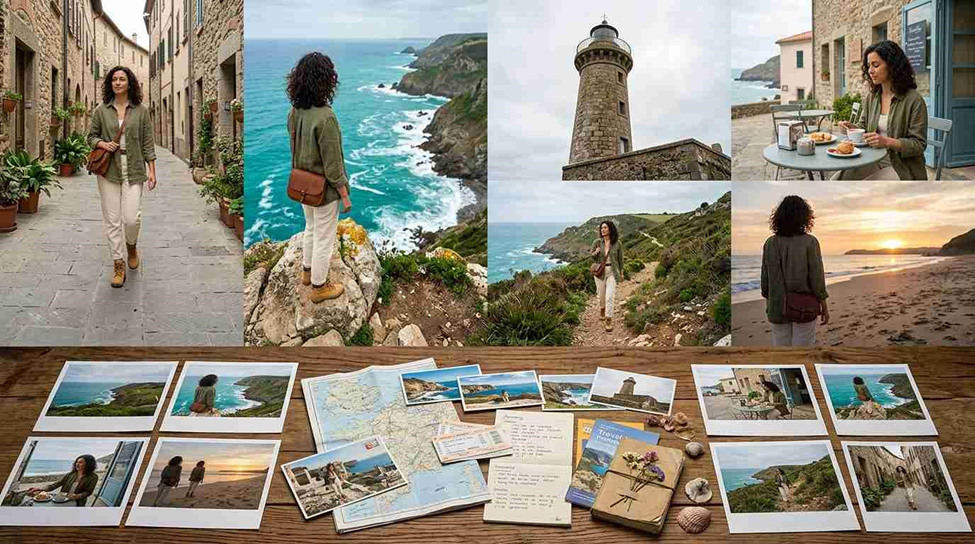
Why Is Filming Solo Travel Content Genuinely Different From Filming With a Partner or Crew?
When you travel with someone else, filming is a shared task, one person holds the camera while the other explores. When you’re solo, every single role falls on you, deciding the shot, setting it up, performing for it, and then somehow also just being present in the destination you came to see. Most solo creators also describe a genuine self-consciousness that never fully goes away, pulling out a camera and talking to it in a crowded market or a quiet temple courtyard feels strange in a way that bleeds into the footage itself, especially in the beginning.
This is precisely the part of solo travel content creation that generic advice tends to skip over entirely, treating filming alone as a simple gear problem rather than the much bigger logistical and emotional juggling act it actually is. A partner or a small crew naturally splits the workload, someone films while someone else scouts the next location, checks the time, or simply keeps watch. Removing that second person doesn’t just add a technical hurdle, it removes an entire layer of shared decision-making that most creative work quietly depends on.
What Does a Typical Day of Solo Content Filming Actually Look Like?
A day of solo filming usually means setting up a shot, walking into frame, performing whatever action you wanted to capture, walking back to check it, and repeating that cycle dozens of times across a single day, all while also navigating a new city, managing your own safety, and trying to actually enjoy the trip you’re documenting. There’s no one to say “that looked great, let’s move on” or catch the moment you almost missed. Every judgment call about whether a shot worked belongs entirely to you, mid-shoot, with no second opinion.
Why Does the Editing Backlog Become the Real Thing That Kills Consistency, Not the Filming Itself?
This is the part most solo travel advice skips entirely. Creative burnout among solo travel creators rarely comes from running out of ideas, it comes from an editing workflow that becomes psychologically impossible after a long day of shooting. The pattern is predictable: skip the footage offload one night, skip the review the next, and within a week there’s a backlog of unsorted clips large enough that opening the folder feels worse than not filming at all.
What Are the Manual Techniques Solo Travelers Already Rely On to Film Themselves?
Most solo creators build a small toolkit of practical tricks, the “set it and walk past” technique, using a backpack or ledge as an improvised tripod, or the classic dramatic-run-across-frame shot that works because there’s genuinely no one else to film it for you. A proper tripod is genuinely useful, but experienced solo creators estimate it only covers about a fifth of the shots a typical travel day actually needs, since most moments happen too quickly or in places where setting up a full rig draws unwanted attention.
Where Do Tripods and Gimbals Fall Short Once the Footage Actually Needs Editing?
Gear solves the filming half of the problem reasonably well. It does nothing for what happens afterward, sorting through hours of clips, some the wrong angle, some cut off, some genuinely great, and turning that raw material into something actually worth posting. A GorillaPod doesn’t organize footage by location, and a gimbal doesn’t cut dead air. The editing step remains entirely manual regardless of how good the gear used to capture the footage actually was.
What Happens When the Best Shot of the Day Disappears While You’re Still Setting Up Gear?
This is one of the most quietly demoralizing parts of solo travel filming. The best footage often disappears while you’re still assembling the tripod, checking the ND filter, or charging a forgotten battery, the exact window of good light or an interesting passerby gone by the time the gear is actually ready. Solo creators who’ve filmed for years still describe specific shots they know they missed simply because setup took a few seconds too long.
These missed moments accumulate into a real, if invisible, cost across a trip. A creator filming with a partner can often recover a missed shot by asking someone to recreate it, or simply catching the next similar moment together. Filming alone means a missed moment is usually just gone, since there’s no one else present to help recreate it, and no do-over once the light changes or the crowd moves on.
| Tripod and manual setup | DIY smartphone editing at night | AI Video Generator | |
| Filming speed for spontaneous moments | Limited by setup time | N/A, filming already happened | N/A, filming already happened |
| Time to a finished, postable clip | Still requires full manual edit | An hour or more per clip, if energy allows | Minutes per pass |
| Realistic after a full day of travel | Yes for filming, no help for editing | Often skipped due to exhaustion | Fits into a short window before bed |
| Consistency across a multi-week trip | Depends entirely on daily energy | Backlog grows faster than it clears | High, since editing stops being the bottleneck |
| Best suited for | Capturing the actual moment | Occasional, low-volume posting | Regular posting throughout a long trip |
How Does an AI Video Generator Change What’s Realistic for a Solo Traveler’s Editing Workflow?
Higgsfield’s AI Video Generator works directly from existing footage, letting a solo creator upload the day’s raw clips and generate a finished, reformatted edit without opening a traditional timeline editor after an already exhausting day of travel. For someone who’s been the director, camera operator, and on-screen talent all day, being able to hand off the mechanical editing work, trimming, pacing, reformatting, is often the difference between a trip that gets documented consistently and one where the footage quietly piles up unedited until the whole habit falls apart.
This matters most on the exact nights when editing would otherwise get skipped entirely, after a long travel day, in an unfamiliar hostel or hotel room, with limited energy and no desk to work from properly. Being able to open a laptop, upload that day’s clips, and walk away with something finished in the time it takes to wind down before bed is the difference between a habit that survives a multi-week trip and one that quietly dies out somewhere around day four.
How Do You Turn One Day of Solo Footage Into a Week’s Worth of Content?
Automatic reframing across aspect ratios means a single day’s raw clips, shot the same way whether captured with a proper camera or the kind of lightweight blogging setup most solo travelers actually carry, can become a vertical Reel, a square feed post, and a longer destination recap, all from one editing pass rather than separate sessions for each platform. This is worth stating plainly, since Higgsfield is sometimes assumed to be a single-purpose video tool. Higgsfield AI is a native AI creative suite, which offers advanced AI image, video, and voice generation, editing, and upscaling tools, meaning the same day’s footage can also produce styled photos for a blog post without switching to a separate app entirely.
Does This Replace the Judgment That Makes Solo Travel Content Actually Feel Personal?
No, and this matters more for solo travel content than almost any other genre. What makes a solo traveler’s content worth following is the honest, first-person perspective, the actual nerves before a solo hike, the genuine reaction to getting lost, the specific observations only someone traveling completely alone would notice. An AI Video Generator speeds up the mechanical part, cutting, pacing, reformatting for different platforms. It does not decide which moments from a day are worth including, or bring the voice that makes solo travel content feel like it’s actually happening to someone, not a polished highlight reel manufactured after the fact.
If anything, removing the editing burden frees up more of the actual energy a solo traveler has left at the end of a day, energy that can go toward writing an honest caption, noticing one more detail worth mentioning, or simply resting enough to genuinely enjoy the next day’s adventure rather than dreading the footage still sitting unedited from the one before it.
What Should a Solo Travel Content Creator Look for in an AI Video Generator?
A few things matter more for this specific use case than for general video editing. Fast turnaround matters most, since most editing happens in short, tired windows at the end of a full travel day, not a dedicated production session. Working directly from real, unstaged footage matters just as much, since authenticity is exactly what solo travel audiences are actually there for. And reformatting across platforms matters practically, since the same day’s footage typically needs to serve Instagram, TikTok, and a blog post all at once.
It’s also worth checking whether a platform runs entirely in a browser rather than requiring a specific installed application, since most solo travelers are editing from whatever laptop fits in a carry-on, not a dedicated production setup back home. A workspace like Higgsfield that doesn’t demand a powerful, dedicated machine fits the reality of editing from a hostel common room or an airport lounge far better than software built around the assumption of a stable desk and uninterrupted time.
What Are the Key Takeaways for Solo Travelers Producing Their Own Video Content?
- Solo travel filming means handling every role alone, director, camera operator, on-screen talent, which is a genuinely different challenge than filming with a partner or crew.
- The editing backlog, not the filming itself, is usually what actually breaks a solo creator’s content consistency over a long trip.
- An AI Video Generator removes that editing bottleneck by working directly from real footage, fitting into the small windows of energy left at the end of a travel day.
- The honest, first-person voice that makes solo travel content worth following stays entirely human, regardless of how quickly the footage gets edited.
What Are Some Frequently Asked Questions About AI Video Tools for Solo Travel Creators?
Will using an AI Video Generator make my solo travel content feel less authentic?
Not if the footage itself stays real. The tool handles cutting, pacing, and reformatting on genuine clips you actually filmed, which is very different from generating content that didn’t happen during your actual trip.
Do I need video editing experience to produce content this way while traveling?
No. Uploading existing footage and describing the changes you want, trimming dead air, reformatting for a specific platform, is enough to produce a usable result without a traditional editing background, which matters when you’re already exhausted at the end of a travel day and the last thing you want is a steep new software learning curve on top of everything else.
How does this actually help with the self-consciousness of filming alone in public?
It doesn’t change the filming moment itself, but knowing the editing step won’t be another draining task afterward can make it easier to actually press record in the first place, rather than talking yourself out of a shot because you’re already dreading the edit later. Removing one source of dread often makes the other, harder one, actually filming in public, feel more manageable too.
Is this only useful for creators posting daily, or does it help occasional travel bloggers too?
It arguably helps occasional posters more, since inconsistent posting usually comes from the editing backlog growing faster than it can be cleared, exactly the problem a faster editing workflow is built to solve. Whether that workflow runs through Higgsfield or a comparable platform, the underlying fix is the same, closing the gap between how much gets filmed and how much actually gets posted.