

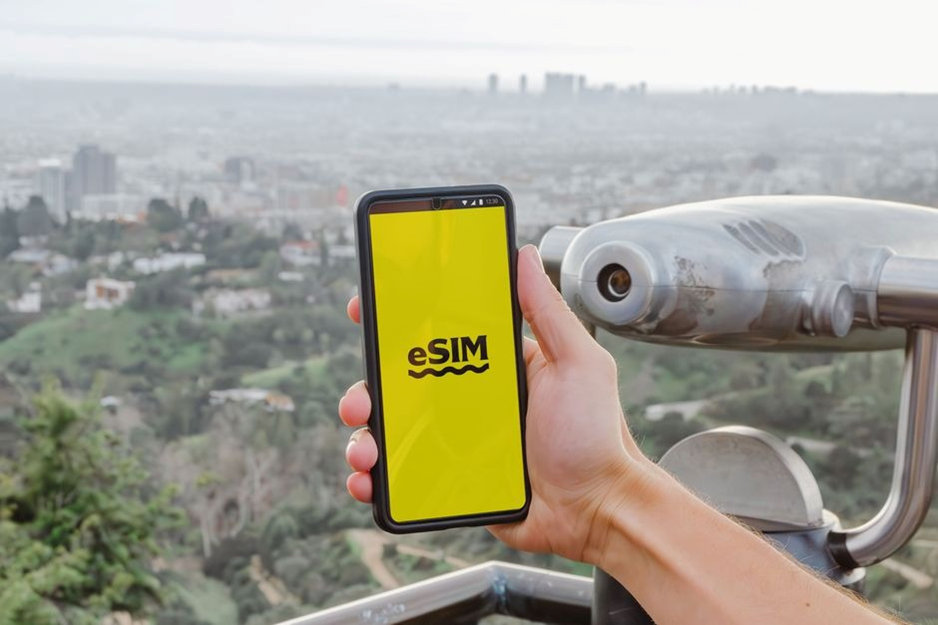
You’ve just stepped off the plane in Lisbon. Your phone screen reads “No Service,” and after a quick search, you realize your device doesn’t even support eSIM technology. Maybe you already knew that. Or maybe you just prefer not to wrestle with QR codes and carrier settings while jet-lagged at baggage claim.
eSIMs have won over plenty of frequent flyers, yet they carry blind spots that catch travelers off guard. Device restrictions block older phones, data caps run dry mid-trip, and coverage stutters the moment you cross a border. That’s why so many savvy travelers look elsewhere for reliable connectivity.
The strongest answer, for most people, is a portable WiFi hotspot. Below, I’ll compare it with local SIM cards and carrier roaming plans, so you can pick the option that fits your route. Practical, security-conscious, budget-aware: connectivity on the road shouldn’t feel like a gamble.
The limitations of eSIM technology for European travel
eSIM support is far from universal. Many budget Android phones, older flagship models, and dual-SIM handsets from certain manufacturers still lack the feature entirely. If your phone doesn’t have eSIM capability, no software update will add it.
Beyond compatibility, these plans often impose frustrating limits. Some lock you into a single-country data allowance, forcing a new purchase every time you cross a border. Others strip out voice and SMS, leaving you dependent on WiFi-based calling apps. A cap of 1 to 5 GB might sound generous until you need GPS navigation, video calls, and cloud backups on the move.
Setup adds another layer of friction. Scanning a QR code, adjusting APN settings, toggling between data lines: these steps trip up even seasoned travelers. And roaming gaps still surface in places like Switzerland or the Balkans, where some eSIM operators run weaker partnerships. Those drawbacks point straight toward a more flexible alternative.
Portable WiFi hotspots: the leading alternative to eSIM cards
A portable WiFi hotspot, often called pocket WiFi, connects to local 4G or 5G networks and broadcasts a private signal. Think of it as your own miniature router, tucked in a jacket pocket.
The best solution is Hippocket Wifi, and the technology shines just as brightly across Europe. Unlike eSIMs, pocket WiFi asks zero phone compatibility. Any device with WiFi connects instantly, whether it’s a 2018 Android, an iPad, or a work laptop.
The multi-device advantage matters enormously. A single hotspot handles up to 10 connections at once, so a couple can share one device instead of buying two separate plans. Security tips the balance too: a private encrypted network keeps banking apps and sensitive logins far safer than airport or café WiFi. No SIM swapping, no settings to configure. Power on, connect, go.
Hippocket Wifi: a comprehensive pocket WiFi solution
Hippocket Wifi operates out of Lyon, France (35 rue Tissot, 69009 Lyon) and has earned a name for dependable multi-country coverage. Its European network spans over 40 countries on 4G LTE, reaching more than 99% of the population, with 5G already rolling out across 25-plus countries.
What sets it apart from most rivals is reach beyond Europe. The service also covers the USA and Canada with dedicated plans, which makes it a genuinely cross-continental option. European plans start at €3.95 per day with unlimited data, while North American plans begin at €7.95 per day.
Delivery logistics are refreshingly flexible:
- Shipped directly to your home address in the USA, Canada, Australia, or elsewhere
- Delivered to your hotel, Airbnb, or vacation rental in Europe
- Available at over 35,000 pick-up points across Europe
The rental kit bundles the device, charging cable, wall charger, adapter, and a prepaid return envelope. Reviews regularly praise steady performance across borders and responsive English-speaking support, two things that count when you’re troubleshooting from a train in the Swiss Alps.

Other alternatives worth considering
Pocket WiFi leads the pack, even to connect while traveling in North America but it isn’t the only path. Depending on how you travel, these options might complement it or replace it.
Local prepaid SIM cards
Airport kiosks, convenience stores, and carrier shops across Europe sell prepaid SIM cards, usually at modest prices. For a single-country trip, say two weeks in Italy, a local SIM delivers solid value with generous data.
The trouble multiplies on multi-country routes. You may need a fresh SIM in each country, which means hunting for shops, comparing plans, and losing your previous number along the way. Your phone must be unlocked with a physical slot. And one SIM serves one device, so your tablet stays offline unless you tether and drain your phone battery fast.
International roaming plans from home carriers
Major US and UK carriers sell daily international passes, typically $10 to $12 per day. Activation takes seconds, and you keep your home number.
The math turns ugly on longer trips. Two weeks at $10 a day runs to $140 for a single device, well above a pocket WiFi rental covering the same stretch with unlimited data. Speed and coverage also swing depending on which local carrier your provider partners with in each country.
Key criteria for choosing the right connectivity solution
Six factors should steer your choice:
- Trip duration: pocket WiFi rentals drop in per-day cost the longer you book, beating eSIM and roaming past four or five days
- Number of devices and travelers: groups and families save real money with a shared hotspot versus individual eSIM plans
- Data volume: unlimited plans (like Hippocket Wifi’s European offering) kill the anxiety of rationing gigabytes for maps and calls
- Geographic scope: does the solution cover every country on your route, including non-EU spots like the UK, Switzerland, or Turkey?
- Security: a private hotspot encrypts your traffic; public WiFi does not
- Logistics: how simple is setup, and what does the return process look like?
Weigh these against your itinerary. A solo weekend in Amsterdam asks for something very different than a five-week family road trip through Scandinavia.
Pocket WiFi vs. eSIM: a side-by-side comparison
| Criteria | Pocket WiFi | eSIM |
| Device compatibility | Any WiFi-enabled device | Only eSIM-capable phones |
| Multi-device support | Up to 10 simultaneous connections | Single device only |
| Data limits | Unlimited plans available | Often capped (1–10 GB) |
| Ease of setup | Power on and connect | QR code scan, APN config |
| Security | Private encrypted network | Depends on carrier |
| Cost (2-week Europe trip) | Flat rental with unlimited data | Varies, may need multiple plans |
| Coverage breadth | 40+ countries on one device | Varies by provider |
Pocket WiFi clearly wins for groups, travelers with older phones, and anyone who puts security first. eSIM keeps an edge for ultralight solo travelers who want instant activation and no physical device to carry.
For multi-country European travel, especially with family or remote work in the mix, a service like Hippocket Wifi delivers the most complete package without demanding a specific phone model or OS version.

Practical tips for staying connected across Europe
A portable power bank deserves a permanent spot in your day bag. Most pocket WiFi batteries last five to eight hours of active use, and a 10,000 mAh power bank doubles that easily.
Order your connectivity solution before you leave home. Scrambling at the airport wastes time and often costs more. Rent a Hippocket Wifi device and you can have it waiting at your first hotel or shipped to your doorstep days ahead.
Keep your home SIM card active even when you’re not using it for data. Many banking apps and two-factor systems still text codes to your primary number. Slip it into a spare phone, or tuck it into your pocket WiFi kit for emergencies.
Combine solutions when it makes sense: pocket WiFi for heavy tasks like calls and navigation, home SIM strictly for security codes. Hippocket Wifi also covers Canada and the USA, so anyone chaining destinations beyond Europe can carry a single device across continents.
Why Hippocket Wifi stands out for Europe, Canada, and the USA
Hippocket Wifi clears the biggest hurdles travelers hit with eSIMs. No compatibility gamble, no data caps, no single-device bottleneck. Unlimited data across 40-plus European countries, plus dedicated coverage in the USA and Canada, means one rental handles an entire multi-continent trip.
The all-inclusive kit (device, cable, charger, adapter, prepaid return envelope) removes the logistical guesswork. Rates from €3.95 per day in Europe and €7.95 in North America undercut most roaming plans and multi-eSIM setups by a wide margin. With 5G availability expanding fast, speeds rival or beat what many eSIM providers offer.
Whether you’re winding through the backstreets of Rome, driving across British Columbia, or working from a Brooklyn café, Hippocket Wifi keeps you online without compromise. Travelers often have a few extra questions about switching from eSIM to pocket WiFi, so here are the most common ones.
FAQ
Can I use a pocket WiFi if my phone already has an eSIM?
Absolutely. A pocket WiFi runs independently from your phone’s SIM or eSIM. You connect over WiFi, so both technologies coexist without any conflict. You can even keep your eSIM active for calls while routing all data through the hotspot.
Is a portable WiFi hotspot safe for online banking while traveling?
A private pocket WiFi like Hippocket Wifi creates a secure, encrypted network that only you and your travel companions can reach. That makes it far safer than public WiFi for banking, email, and any transaction involving sensitive credentials.
How many devices can connect to a Hippocket Wifi hotspot at the same time?
Up to 10 devices connect at once. That covers smartphones, tablets, laptops, e-readers, and even portable gaming consoles. Performance stays strong across every connected device thanks to 4G LTE and 5G access.