

Something about European Christmas markets makes me want to arrange a winter trip almost instantly. There is something lovely about the lights and the small wooden stalls, the huge mugs of mulled wine and the excuse to eat something warm every couple of hours when December comes around.
The dilemma is where to go.
Markets in Budapest are beautiful. Vienna itself might easily occupy a full joyful weekend. And then there is Bratislava, Nuremberg and all the little cities along the Danube that suddenly appear like they are on a Christmas card.
Trying to fit multiple of them in one trip generally requires trains, hotels, packing, unpacking, and figuring out how to travel from one place to the next.
That is when a Christmas market river tour begins to make a great deal of sense.
Instead of changing hotels every couple of nights, you become used to the same accommodation while the ship moves. You wake up in a new place, spend the day discovering it, and then come back on board and do it all again the next morning.
But what does that truly mean, day by day?
Day 1: Arrival in Budapest
Budapest is a great location to start since it is dramatic before anybody turns on the Christmas lights.
The Danube divides Buda and Pest, with the Hungarian Parliament on one side and Castle Hill towering over the other. Add Christmas lights, lit bridges, and the fragrance of cinnamon wafting from market booths, and the city fits winter remarkably well.
I would not attempt to see everything all on the first day.
If you have flown in that morning, allow time to settle in, go about the center, and get your bearings. Stroll to Vörösmarty Square or the market surrounding St. Stephen’s Basilica and start the tour at a leisurely pace. If you’re planning to spend a little longer in the city, take a look at my Budapest 2-day itinerary for more ideas on what to see and do.
Try something warm, drink your first mulled wine, and avoid the urge to buy every Christmas décor you see. And lots more to come.
The biggest perk of starting a river trip here is that once you have unloaded, that’s it. Your baggage can remain just where it is, while the countryside changes around you.
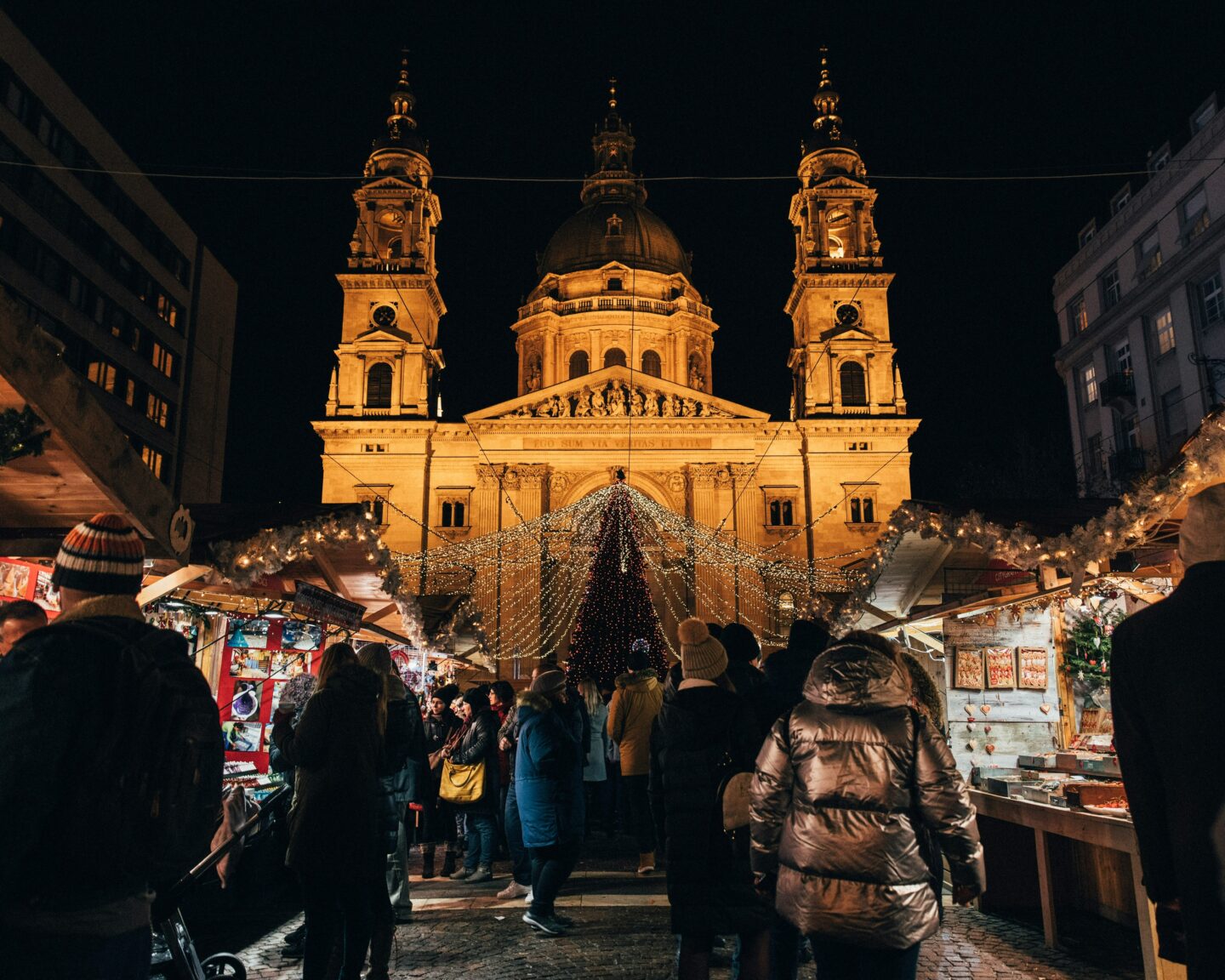
New Place: Getting Up on Day 2
This is the bit of river sailing that seems extremely different from a usual European city holiday.
No checking out, no hauling your bags to a station and trying to figure out which platform your train leaves from. Depending on your timetable, you may already be on your way to your next location when you wake up.
That may be Bratislava, along the paths of the Danube Christmas markets. The Slovak capital is substantially smaller than Budapest or Vienna, which is exactly why I think it fits so well in an itinerary like this. It does not always take many days to acquire the feel of it.
In the ancient town you may take your time meandering around, stopping at the main plaza, visiting the Christmas booths, and still have time to amble around without watching the clock.
And it was something I would try to remember along the way; you don’t have to consider each stop as a battle to see all the attractions.
Sometimes the nicest part is just having time for a hot drink and walking around places you had not intended to explore.
3rd Day: Christmas in Vienna
If there is one location, I would give up all attempts at restraint; it would be Vienna. The city really embraces the Christmas spirit.
Markets spring up in front of palaces and throughout some of Vienna’s largest squares, and lights illuminate streets that already look extremely lovely the rest of the year. It is that type of day when you will want comfortable shoes.
You may start in the historic center and then head toward one of the larger markets. Rathausplatz is perhaps the obvious pick, but Schönbrunn blends the Christmas ambiance with one of Vienna’s most recognized buildings.
If you’re deciding which markets to visit, I’ve also put together a guide to the best Christmas markets in Europe, including festive stops in Vienna and Nuremberg. But I would not spend all day running around the marketplaces merely to cross things off a list. Allow time for Vienna itself.
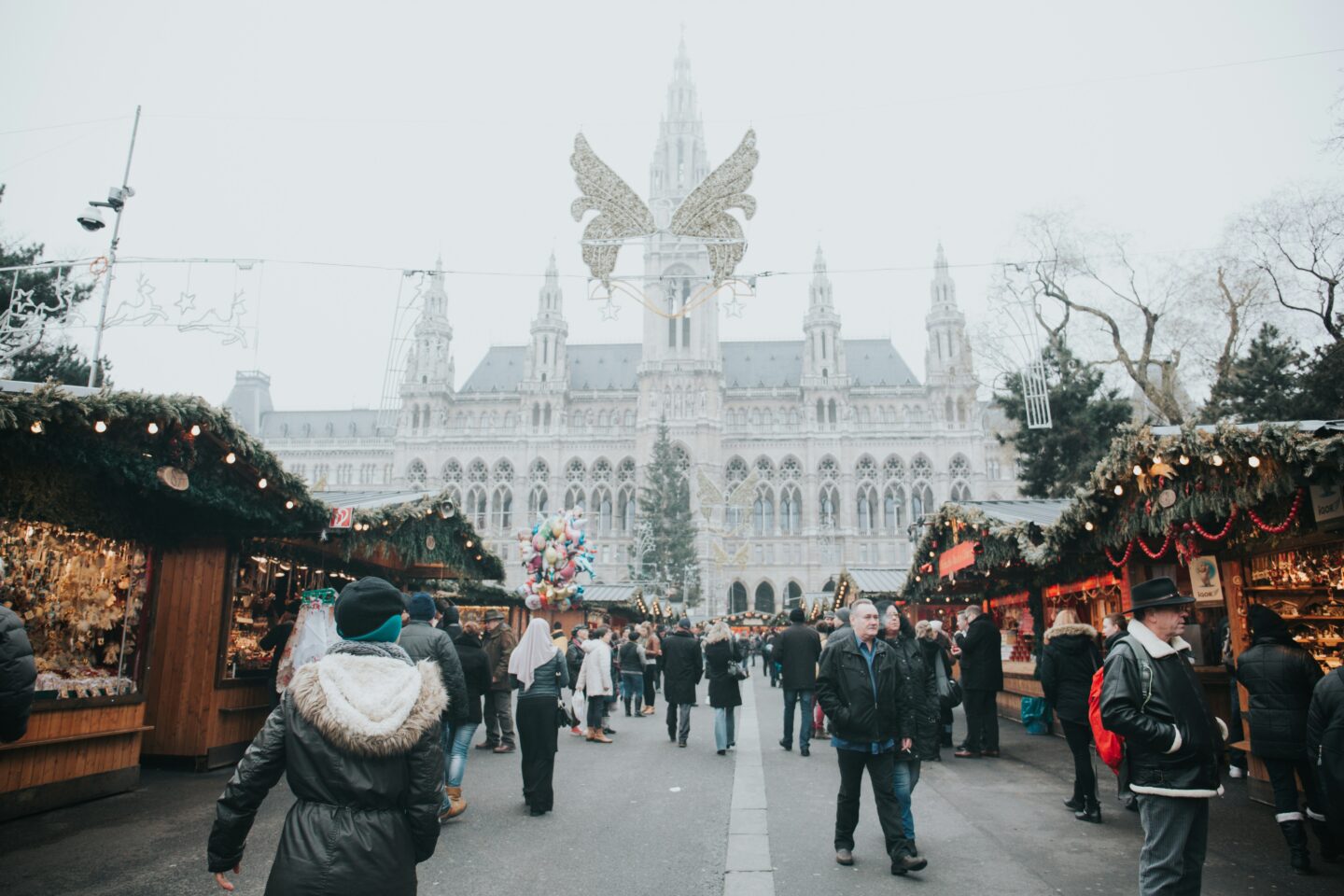
Day 4: Wachau Valley and Melk
After a few cities, a calmer day seems unexpectedly nice
The Wachau Valley has something in store for you.
The Danube is lined with vineyards, tiny towns, and ancient scenery in this length, and traveling through it gives a whole different perspective than exploring Budapest or Vienna on foot.
Depending on your plan, Melk may be one of the key destinations of the day.
You arrive to see its impressive Benedictine abbey looming large over the town. Even if the vacation was booked for the Christmas markets, days like today hinder the holiday from becoming seven days of shopping for decorations and enjoying mulled wine.
Time to really look at the geography that connects these cities.
And really, I would welcome the slower pace at this stage.
Day 5: Passau & Optional Day Trip to Salzburg
At the confluence of three rivers, Passau has the sort of small old center that is great for a winter walk.
Today is another day I would skip overplanning.
Roam the center, investigate the Christmas market stalls, locate a place for lunch and enjoy being someplace quite a lot smaller than Vienna or Budapest.
Some itineraries may also include possibilities to visit Salzburg at this stage of the trip.
That might be enticing if Salzburg has long been on the top of your list. But I’d consider twice before discounting any probable trip immediately.
One of the delights of a river trip is that you do not have to fill every hour.
Sometimes I would prefer actually to explore the location where the ship has stopped than go many more hours to somewhere else just because I can.
Day 6: Regensburg and the Smaller-Market Play
By now you will probably have a routine for Christmas markets. Before buying anything, walk around once. Try around many food vendors before settling on lunch. Tell yourself you really do not need another Christmas mug. Buy one regardless. Regensburg adds another German ancient city to the mix but by now the variations between the marketplaces are more evident.
That is why it is worth visiting a few.
They might all have lights, food, and adorned wooden booths but each city has its unique environment, local specialties, and customs. It is not the same sensation as being in Vienna underneath the great building or in Budapest by the Danube, but the experience in a modest Bavarian city is distinct.
Days 7 and 8: The End in Nuremberg
Nuremberg seemed a fitting place to end. Its Christkindlesmarkt is one of Germany’s most famous Christmas markets, and the historic town is just the kind of backdrop you would want after a week of traveling around Central Europe.
This location is where I would leave a little space in the suitcase. After a few days of urging myself not to buy too much, I would definitely utilize the last visit for gifts, decorations, and whatever I had missed out on getting earlier.
It also helps to have more than a few hurried hours here. If your trip involves an overnight stay or longer, you will get to experience the city as the day-trippers start to go, rather than treating the market as one last thing to cross off the list.
What are the days really like?
The greatest mistake I made regarding river cruises was thinking I would be spending much of the vacation sitting on a boat observing the river. A Christmas market itinerary is a bit busier than that.
A typical day may be breakfast on board, arriving at a city in the morning and sightseeing either independently or on an excursion, a lunch stop, visiting a Christmas market, and returning to the ship later in the afternoon or evening.
You navigate between places and occasionally when you are eating, relaxing, or sleeping.
That means the ship is less about entertaining you every second and more about taking some of the tedious logistics out of a multi-city vacation.
Your room comes with you.
And when you are touring many countries in a week, that is a fairly enticing proposition.
What I Will Carry
I had put warm layers at the top of my list. There is a lot more standing outside at Christmas markets than you think. And there is a significant difference between strolling rapidly through a freezing city and spending 20 minutes looking at one row of stalls.
I would pack:
– A really warm jacket
– Waterproof shoes or boots that are comfortable
– Gloves, scarf, and a hat
-Thin layers that are easy to remove inside
– A little cross body bag
– A battery pack for a cellphone
– A little umbrella
– Some spare place in my baggage for what I will undoubtedly buy
I would bring something a little dressier for evenings on board, but I would not give up baggage room for a lot of formal clothes.
This vacation would be a victory for comfort, for me.
Christmas Market River Cruise: Is It Worth It?
It is contingent upon how you are traveling.
If you want to spend five or six days in one place, getting slowly to know different neighborhoods, a cruise itinerary may seem too rushed.
But if you have been scrolling through the Christmas markets in Budapest, Vienna, and Germany and wondered how to mash them together without turning the festive season into a convoluted rail schedule, this form of travel answers a real problem.
You open one. Someone else handles the trip between cities. And each morning, outside, there is another piece of Europe waiting.
I would still have a broad concept of what I wanted to see at each destination, but I would not plan out every hour. Christmas markets are greatest when you can roam, pause when something smells nice and adjust your plans because you have spotted a quiet street or café you want to investigate.
That is what makes this type of travel intriguing to me. It is not about seeing as many Christmas markets as humanly feasible.
It is about seeing multiple remarkably diverse European places without spending half your time wondering about how you are going to the next one.