

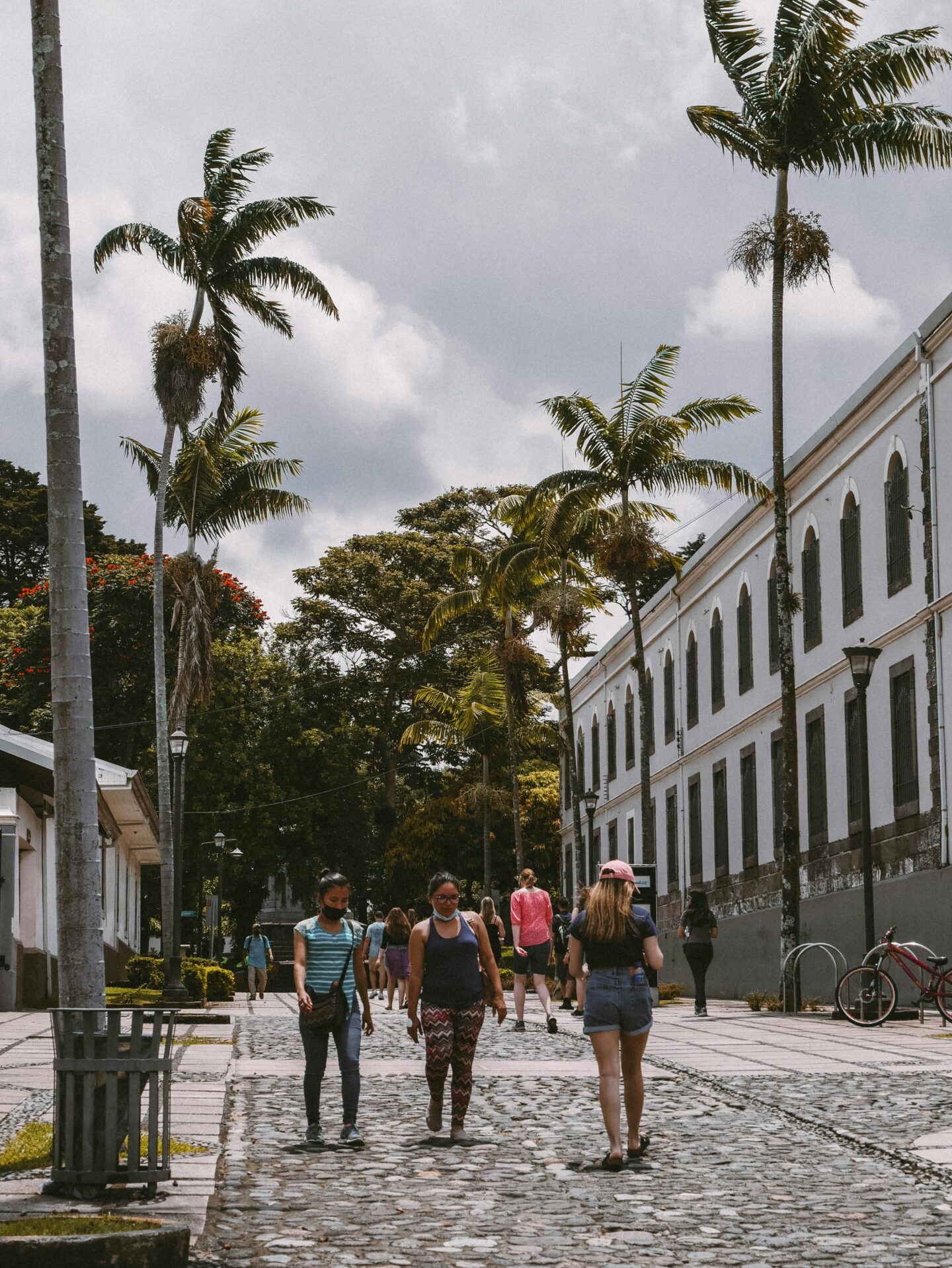
Central America is one of those regions that rewards slow travel. Moving from the volcanic highlands of Guatemala to the Caribbean coast of Costa Rica, from the colonial streets of Granada to the jungle ruins of Tikal, each border crossing brings a new landscape and a new culture. But each border crossing also used to bring a new connectivity challenge.
Getting a local SIM card in Central America has traditionally meant stopping at a small phone shop, showing your passport, waiting for registration, and hoping the clerk speaks enough English to help you pick the right plan. In countries like Honduras or Nicaragua, finding a reliable carrier store outside major cities can be difficult. And if you are hopping between Guatemala, Belize, Honduras, and El Salvador in a single trip, repeating that process four times is nobody’s idea of a good time.
Travel eSIMs have made this entire hassle unnecessary, and for Central America in particular, the difference is dramatic. An eSIM for travel replaces the need for physical SIM cards entirely, keeping you connected across multiple countries without the logistical friction.
What is a travel eSIM?
An eSIM is a digital SIM card embedded in your smartphone. Unlike a traditional physical SIM card, you download a data profile that connects you to a local network in your destination country. Your regular SIM card stays in the phone, so your home number remains active for calls and texts. The eSIM runs alongside it, handling your mobile data connection.
The setup takes about five minutes. You purchase an eSIM plan, scan a QR code, and the eSIM profile installs directly on your phone. It can be set up before you even leave home, which means you land with mobile data already waiting. Many eSIM providers also offer a dedicated eSIM app that makes the installation and data management even simpler.
Compatible devices include all iPhones from the XS onward, Samsung Galaxy S20 and later, and Google Pixel 3 and above. Check your phone model before purchasing, but if your phone was made in the last four to five years, it almost certainly supports eSIM technology.
Why eSIMs make particular sense for Central America
Central America presents specific connectivity challenges that eSIMs handle better than any alternative.
Multi-country itineraries are the norm. Most travelers visit at least two or three countries in a single trip. A backpacker might cross from Mexico into Guatemala, head to Belize for a few days, then continue south through Honduras to Nicaragua and Costa Rica. With physical SIM cards, that is five separate purchases, registrations, and setups. With a regional travel eSIM, one data plan covers the entire route across multiple countries.
Rural coverage matters. Central America’s biggest draws are often off the beaten path. Lake Atitlan, Semuc Champey, the Corn Islands, Monteverde Cloud Forest. Having data in these areas depends on connecting to the strongest local carrier. Good eSIM providers partner with tier-one networks in each country, giving travelers the same coverage as local residents rather than relying on roaming agreements that sometimes default to weaker networks.
Safety and navigation. Reliable GPS navigation is not a luxury in Central America. Whether you are driving a rental car through the mountain roads of Costa Rica or taking a chicken bus in Guatemala, having Google Maps or Maps.me working offline and online makes travel safer and less stressful. An eSIM ensures continuous data access for navigation, translation apps, and emergency communication.
Border crossings become seamless. When you cross from Guatemala to Honduras at a land border, your eSIM simply switches to the local partner network. There is no need to find a new SIM card vendor on the other side of the border, which at smaller crossings might not even exist.
Cost comparison for a typical Central America trip
The savings add up quickly on a multi-country trip. Here is what connectivity typically costs for a three-week trip through Guatemala, Honduras, and Costa Rica:
Roaming from a US carrier: Most major US carriers charge between $5 and $12 per day for international roaming in Central America. Over 21 days, that is $105 to $252 for limited data (often capped at 500MB per day at full speed).
Local SIM cards in each country: Budget roughly $10 to $20 per country for a prepaid SIM with a few gigabytes of data. For three countries, that is $30 to $60 in direct costs, plus the time spent purchasing and setting up each one. Factor in taxi rides to carrier stores and potential language barriers, and the true cost rises.
Travel eSIM: A regional eSIM plan covering Central America with 10GB of mobile data valid for 30 days typically costs between $15 and $25. Some eSIM providers offer unlimited data plans as well. One purchase, one setup, coverage across all three countries.
The financial case is clear, but the convenience factor is arguably even more valuable. Time spent sorting out phone connectivity at each border is time not spent exploring.
Practical tips for using an eSIM in Central America
Install before you fly. You can set up your eSIM at home while still connected to Wi-Fi. The profile downloads in under a minute and sits dormant until you activate it at your destination. This eliminates any stress about finding Wi-Fi after landing.
Choose a regional plan. Single-country plans exist, but for Central America travel, a Latin America or Central America regional plan almost always offers better value. One plan, multiple countries, no additional purchases needed.
Check your phone compatibility. If you bought your phone through a carrier on a payment plan, make sure it is fully unlocked. Some carrier-locked phones restrict eSIM functionality. A quick call to your carrier can confirm this before you travel.
Keep your home SIM active. The beauty of eSIM technology is dual-SIM functionality. Your regular number stays reachable for calls and texts (at standard roaming rates for those specific functions), while all data-heavy tasks like maps, social media, messaging apps, and web browsing run through the cheaper eSIM data plan. You never need to remove your physical SIM card.
Download offline maps as backup. While eSIM coverage through local carriers is generally excellent across Central America, some very remote areas may have limited signal. Download Google Maps offline for the regions you plan to visit as an extra layer of preparation.
Staying connected changes the trip
There is a noticeable difference between traveling with reliable data and traveling without it. Beyond the obvious benefits of navigation and communication, consistent connectivity means being able to look up restaurant reviews in the moment, check bus schedules in real time, translate a menu or a conversation, book last-minute accommodation when plans change, and share photos and updates without hunting for cafe Wi-Fi.
For solo travelers in particular, the safety dimension matters. Being able to share your live location with someone back home, call a ride through an app, or quickly look up embassy information in an emergency provides genuine peace of mind.
Central America is a region that deserves to be explored freely and spontaneously. Having a reliable eSIM for travel in your pocket makes international travel possible without the logistical friction that used to come with crossing borders every few days.